
Python Static Analysis, Without the Noise
PythonStator combines Ruff, Pyright, mypy, Semgrep, Bandit, Pylint, and CodeQL into one streamlined analysis workflow — with intelligent deduplication that helps teams focus on the findings that matter.
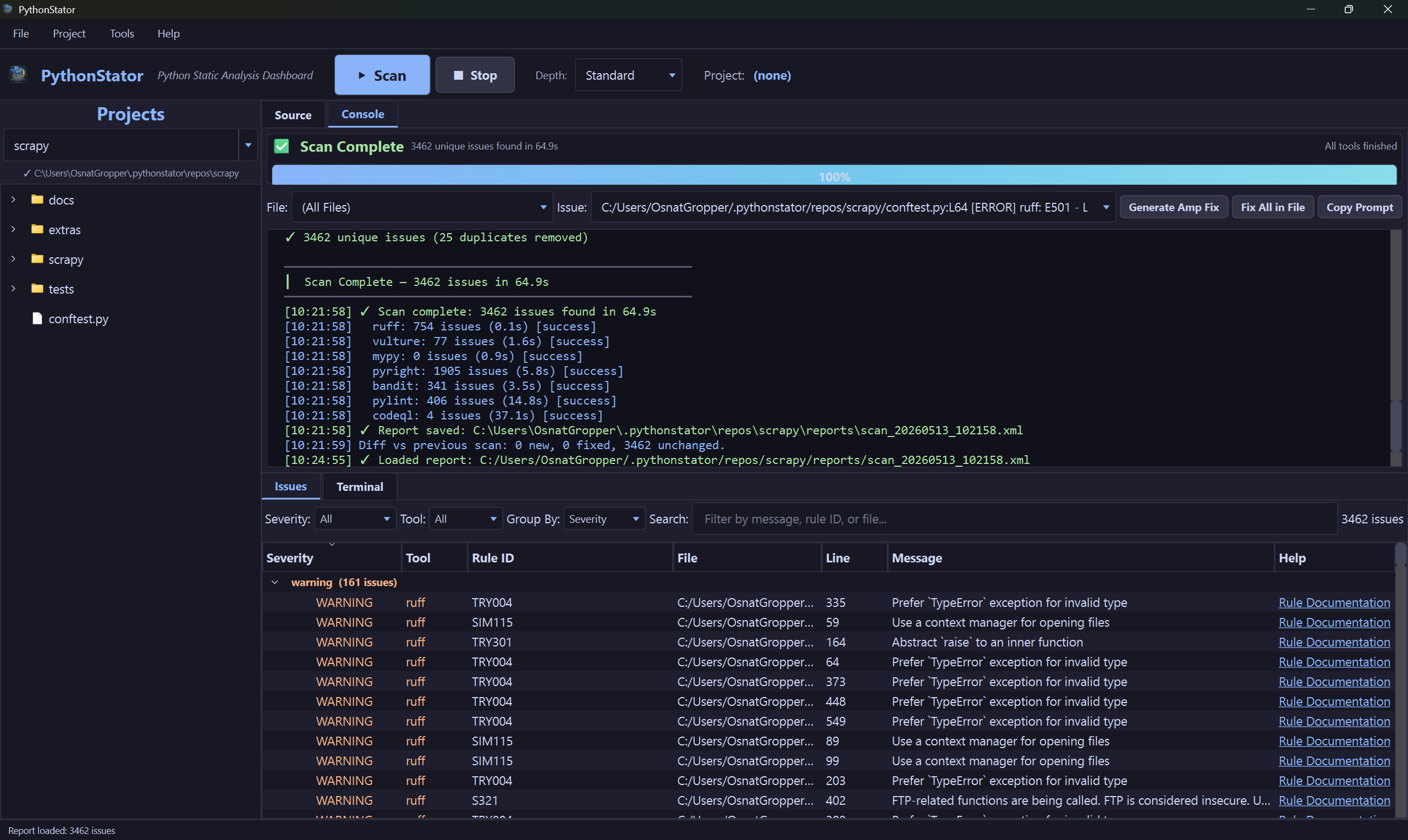
Static analysis is powerful. Raw output is overwhelming.
Teams often run several tools, but each one produces separate output, overlapping issues, different severity labels, and inconsistent file paths — creating noise that buries the findings that actually matter.
Too many duplicate findings
The same issue surfaces from multiple tools, inflating reports and slowing review.
Scattered tool output
Each tool ships its own format, severities, and paths — making consolidation manual work.
Hard to prioritize risk
Without a unified view, real bugs and security issues get lost in low-value warnings.
One coordinated analysis workflow
PythonStator runs multiple Python analysis engines and brings the results into a single interface — giving teams a clearer view of code quality, typing issues, security concerns, and maintainability risks.
Multi-tool analysis
Run linting, type checking, security scanning, and code quality checks from one workflow.
Intelligent deduplication
Reduce repeated findings across tools using fingerprinting and proximity-based matching.
Readable reports
Generate reports with tool versions, scan status, issue details, and project context.
GUI and CLI
Use the desktop interface for review or the CLI for repeatable automation.
Powered by trusted analysis engines
Less duplicate noise. More useful signal.
PythonStator’s deduplication groups overlapping findings from different tools while preserving real issues — reducing review fatigue and helping teams act faster.
Raw tool output Before
- 126 findings
- Repeated file locations
- Overlapping warnings across tools
- Inconsistent severity categories
PythonStator view After
- Grouped related findings
- Clearer severity
- Preserved issue context
- Easier triage
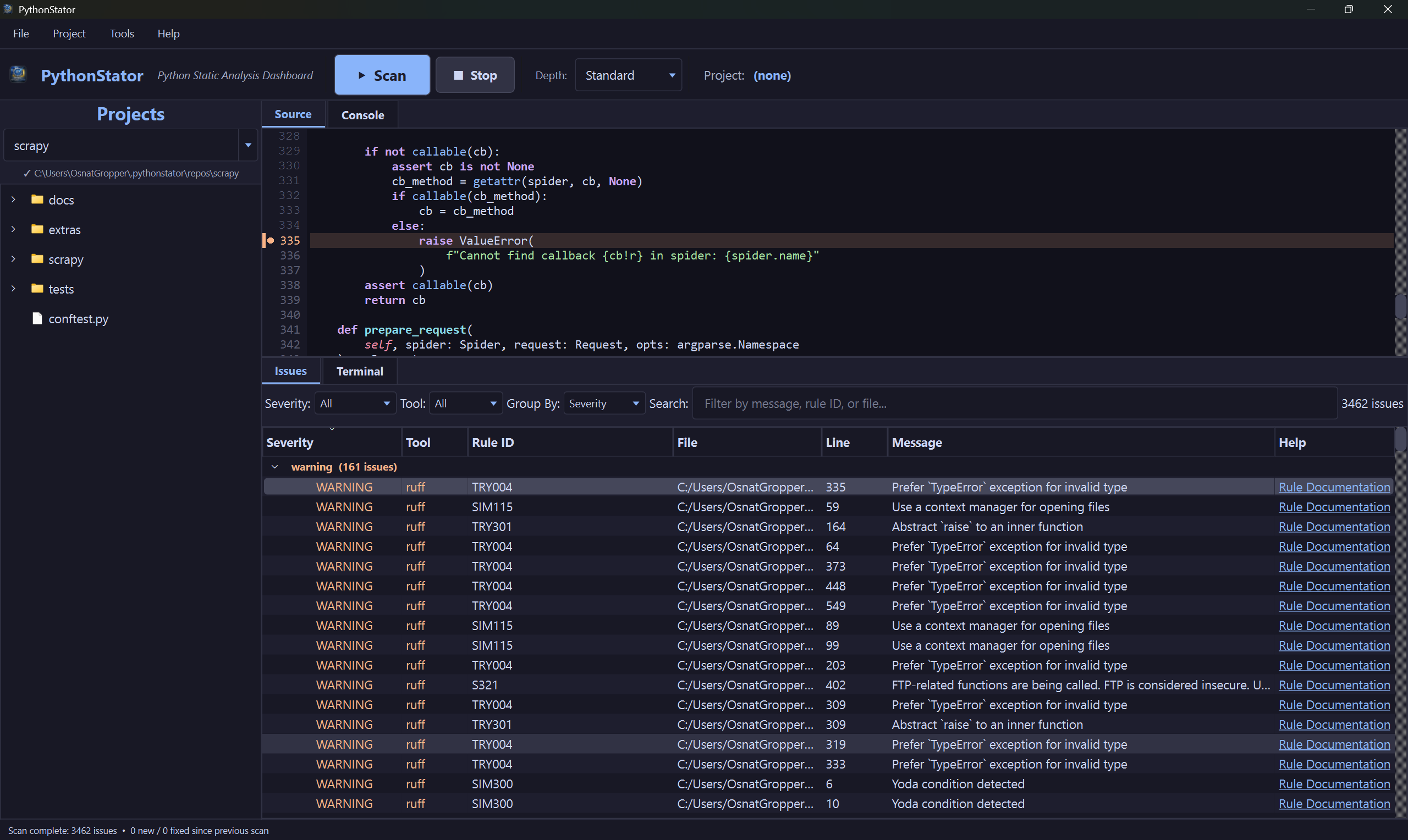
Designed for real analysis workflows
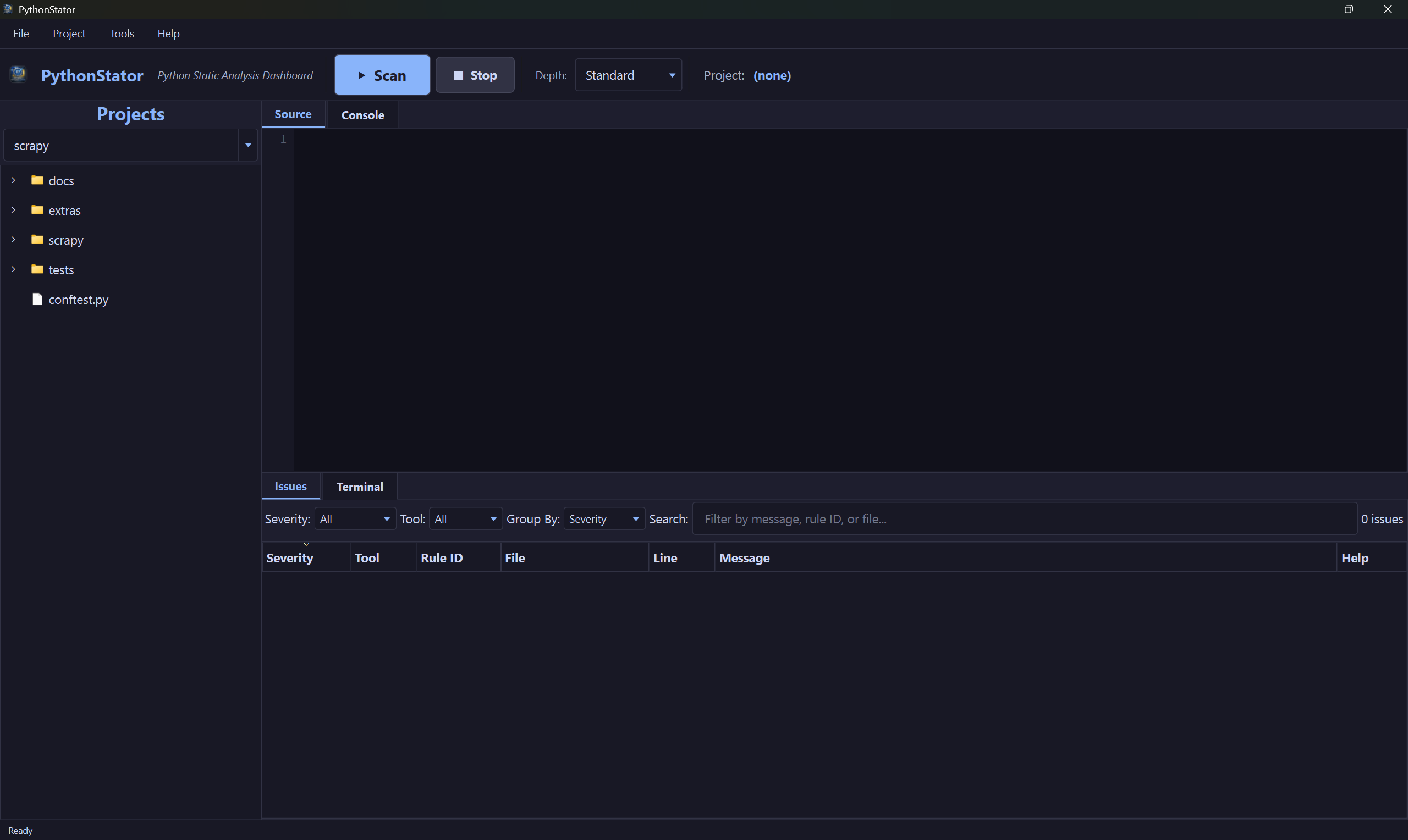
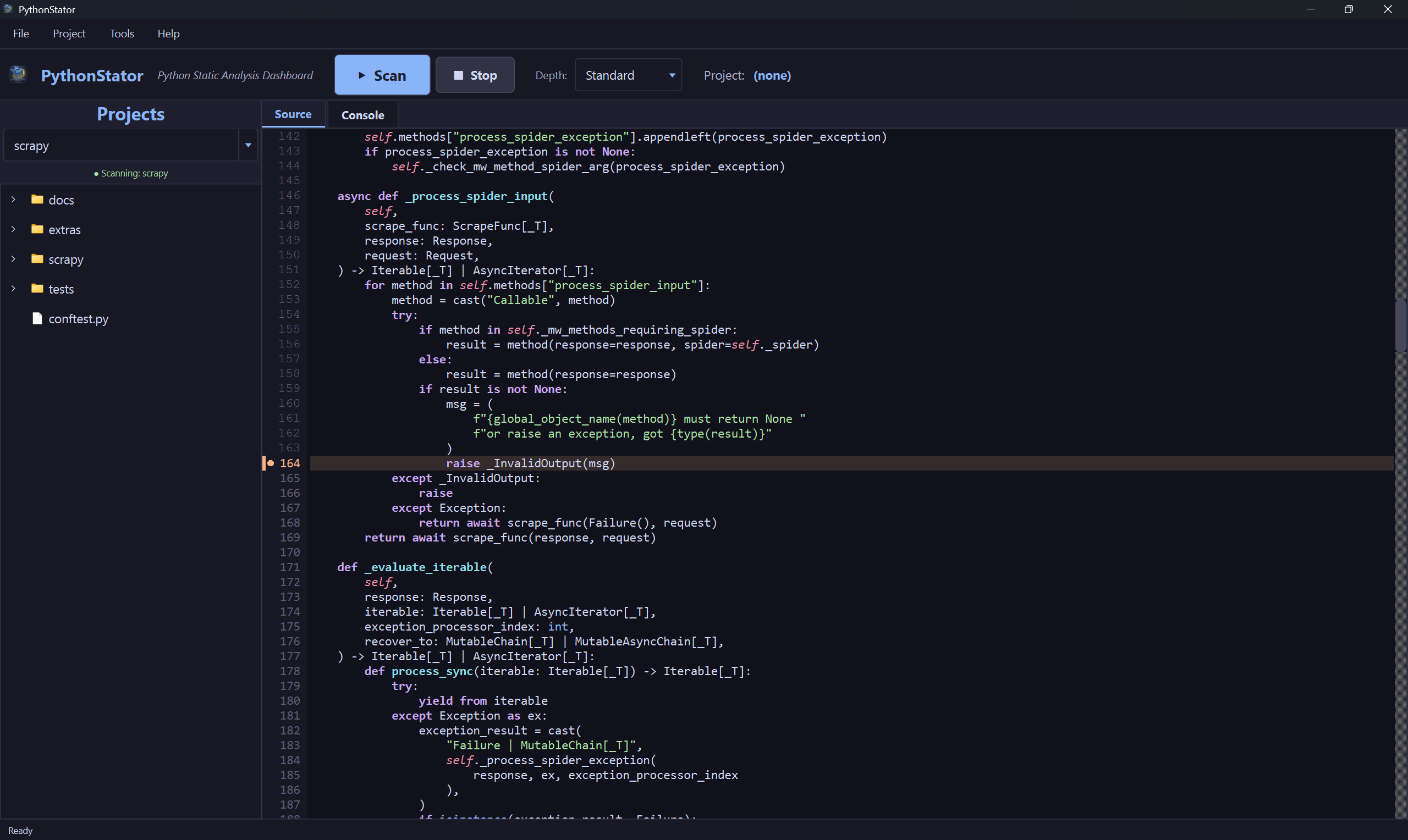
Built for teams that need confidence in Python code
Development teams
Catch typing, linting, and maintainability issues earlier.
QA teams
Add repeatable static analysis to release validation.
Security reviewers
Surface Python security findings from Bandit, Semgrep, and CodeQL.
Engineering leaders
Get clearer reporting and trend visibility across scans.
From scan to action
Select a Python project
Point PythonStator at a local repository or workspace.
Run the analysis engines
All seven tools execute under one orchestrated scan.
Review deduplicated findings
Grouped issues, clearer severity, preserved context.
Export or share the report
Hand off a clean report with tool versions and scan status.
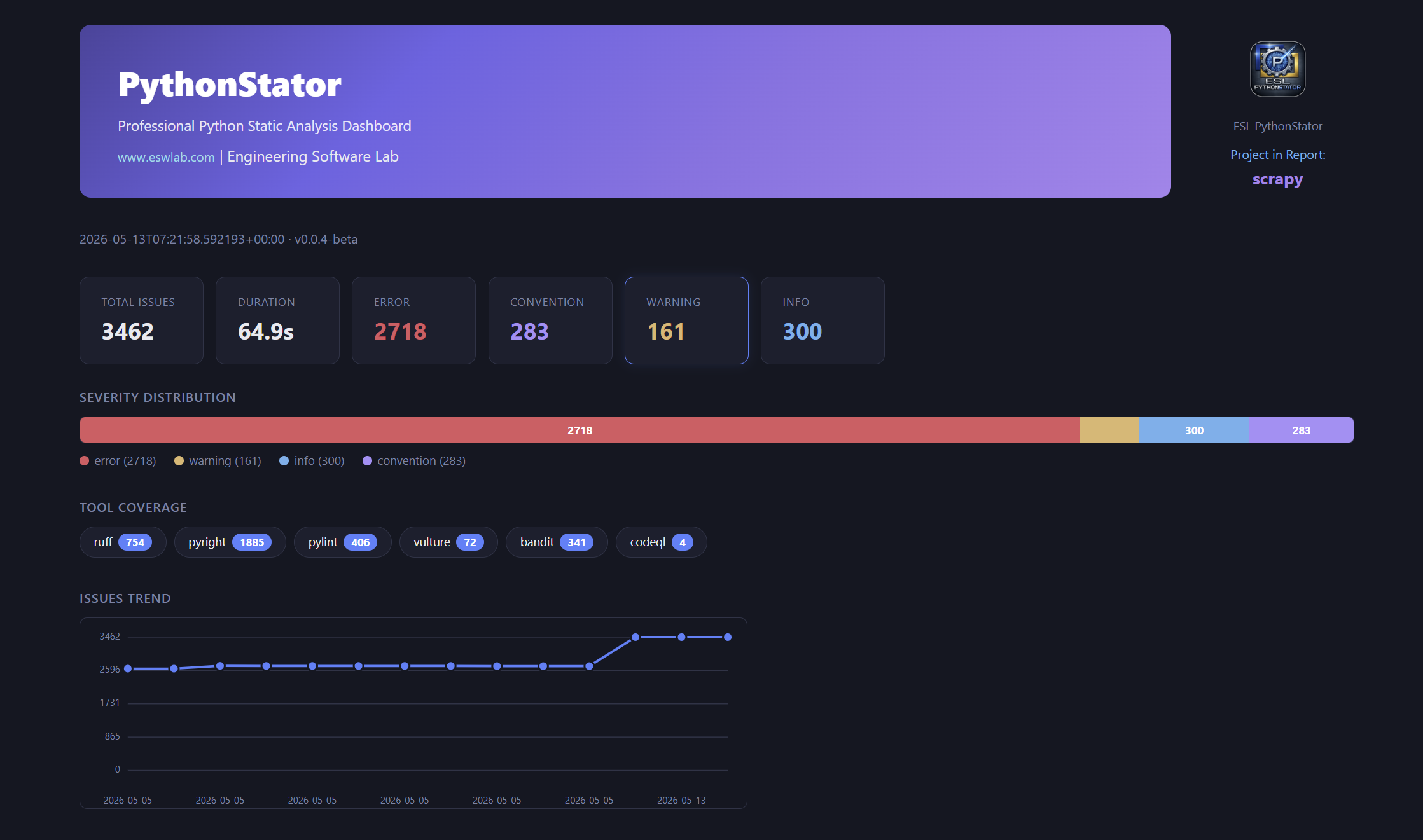
Reports that explain what happened
Every PythonStator report communicates the full picture of a scan, so reviewers, leads, and auditors can act with confidence.
- Which tools ran
- Tool versions
- Scan status
- Findings by severity and category
- File and line references
- Deduplication / grouping context
Do you wish to know more ?